

Gamma launches GCE in Singapore for APAC partner links
Thu, 21st May 2026.webp)
Gamma Communications has launched its GCE proposition in Asia-Pacific, with a focus on Singapore.
Singapore is a key regional node in Gamma's service provider strategy. The launch is part of the company's wider APAC push through its service provider division, with the city-state central because of its role in regional traffic flows and interconnection across Asia-Pacific.
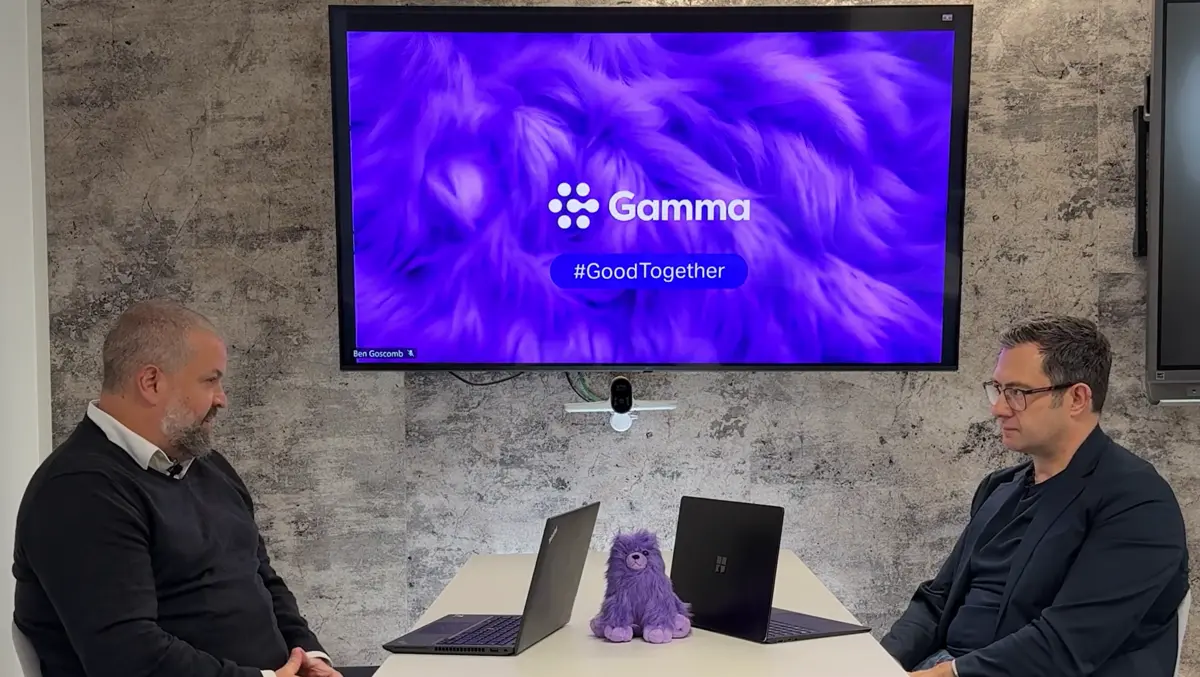
Tristan Plummer, Head of Solution Architecture - Service Provider at Gamma Communications, said the domestic market was not the main attraction. Instead, he pointed to Singapore's wider role as a regional routing hub.
"Mike, absolutely. Look, it's more of a strategic node for us. If you look geographically, it's centred right in the middle of Asia Pacific. So, from a latency perspective, it's a perfect node for interconnectivity with our partners. The Singapore +65 market alone doesn't drive a huge amount of call volume, but a lot of the surrounding countries will transit through this node and connect into our partners' platforms," said Tristan Plummer, Head of Solution Architecture - Service Provider, Gamma Communications.
The launch is therefore aimed at wholesale voice and partner interconnection rather than local retail volume. In practice, Gamma is treating Singapore as a regional exchange point, allowing traffic from surrounding markets to pass through the hub before reaching partner platforms.
Licensing Issue
Regulation is also central to the proposition. Companies that want to trade in Singapore require an SBO licence, which Gamma holds, according to Plummer.
"Look, the SBO license is a requirement to trade in Singapore. We hold an SBO licence, and through a tri party arrangement, we would be able to offer that to our partners if they didn't hold that licence themselves," said Plummer.
That matters because entry into the Singapore market depends on formal approval. For international partners, Gamma's status as a licence holder could shape the route into the market through the structure Plummer described.
Singapore's telecoms sector is also highly concentrated, with the incumbent continuing to shape pricing, access and the practical options available to service providers seeking local connectivity and market entry.
"It's very dominated by Singtel, the incumbent. There are some other tier one options available, but I think it's about eighty six percent market share by Singtel still, Mike, so quite restrictive," said Plummer.
Partner Model
Gamma is presenting the offer through a partner-led model aimed at service providers that need access to Singapore and the wider region. The proposition is framed around operational processes and transaction handling rather than a broad consumer launch.
Plummer said the support model relies on automation and digital access points, including self-service functions, know-your-customer checks and procurement workflows delivered through APIs or portals.
"Once again, it's our automation and our portals that supporting our partners with self-service, KYC compliance, all procurement through automation, either API or portal based," said Plummer.
The emphasis on automated procurement and compliance suggests Gamma wants partners to manage services through standardised workflows, an approach commonly used in wholesale telecoms where operators and service providers need repeatable ordering, identity checks and service management across multiple territories.
Mike Mills, Managing Director - Service Provider at Gamma Communications, positioned Singapore as an important market in the company's APAC strategy. His comments highlighted geography, compliance and competition as the main issues shaping market access for telecoms providers in the region.
The focus on Singapore also reflects a broader pattern in APAC network strategy. Operators often use the market as a base for regional links because of its established telecoms infrastructure and role in international connectivity. Gamma's approach follows that logic, with the city-state acting as a point where regional traffic can be aggregated and passed on.
While the local +65 market may not generate the largest volume on its own, Singapore retains strategic value because traffic from nearby countries often routes through it. In a wholesale setting, revenue and usage do not depend on local calling demand alone. They also depend on where interconnection is most practical and where network relationships are already established.
The launch also shows how Gamma is trying to make its service provider business more relevant outside its home markets. Rather than entering every market with the same model, it is focusing on a location where licensing, geography and interconnectivity can support a broader regional offer. Singapore fits that pattern because it combines regulatory clarity with a central network position.
For partners without their own Singapore licence, the tri-party structure described by Plummer may provide a route into the market without a direct local application. That does not change the market's underlying concentration, but it may affect how quickly service providers can begin operating and how they structure their local presence.
Singtel's dominance remains a notable feature. In a market where one incumbent retains around 86 per cent share, alternative operators have limited room. Service providers in that environment often look for specialist arrangements, interconnect agreements and wholesale partnerships rather than direct competition with the largest local player.
Gamma's comments also suggest the company sees administrative process as part of the commercial offer. KYC, ordering and access through APIs or portals are operational features, but they can influence whether a partner chooses one provider over another. In regulated telecoms markets, ease of transaction often matters alongside network reach and licensing status.
The APAC launch of GCE therefore centres on a market that offers strategic reach rather than domestic scale alone. Singapore gives Gamma a licensed foothold and a regional node, which the company is using to attract partners seeking an entry point into Asia-Pacific traffic flows and service arrangements.
"So, if you have a requirement in Singapore, please don't hesitate and get in touch with us. We'd love to try and help you solve that problem," said Mike Mills, Managing Director - Service Provider, Gamma Communications.
To find out more about Gamma Communications' GCE proposition, visit Gamma Communications.