

Forrester predicts cautious surge in humanoid robots
Wed, 25th Feb 2026
Forrester has released new research on the commercial outlook for humanoid robots, arguing that adoption is moving beyond experiments in some industries. Wider roll-outs, however, remain constrained by cost, complexity and regulation.
The report, titled The State of Humanoid Robots, 2026, assesses where firms are seeing near-term value from machines designed for human-like movement and interaction. It also identifies barriers to mass deployment, including gaps in safety frameworks and cybersecurity concerns.
Adoption signals
Interest is already high among executives responsible for automation programmes. Forrester's Automation Survey 2025 found that 69% of automation decision-makers are adopting or planning to adopt humanoid robots.
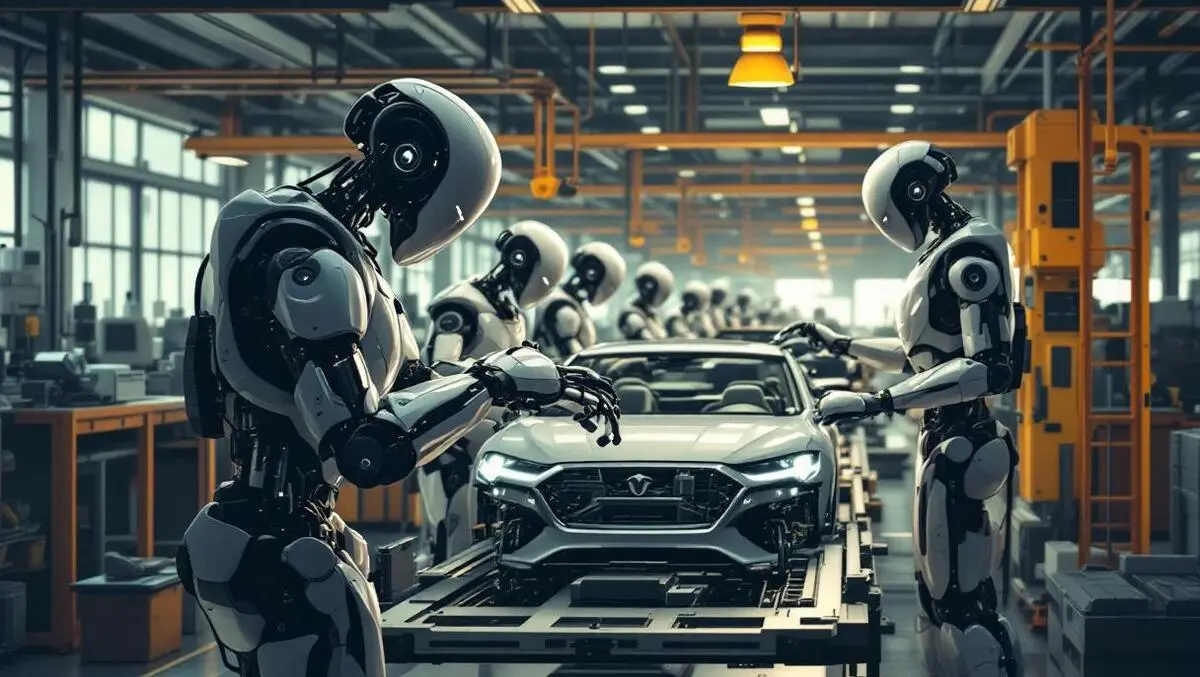
Early deployments are concentrated in labour-intensive environments with structured processes and clear productivity metrics. Manufacturing, logistics, healthcare and customer service are the main sectors testing humanoid systems in live operations.
Forrester links this wave of interest to the promise of combining dexterity with endurance and repeatability in workplaces that still rely heavily on manual work. The strongest fit is in tasks that require human-like handling and predictable routines, rather than open-ended autonomy.
Operational results
The research highlights operational and financial outcomes reported by companies that have introduced humanoid robots into repetitive workflows. It cites cases where standardisation cut errors and reduced staffing costs in specific activities.
According to the report, companies are seeing 40% reductions in processing errors and 20% decreases in labour costs when humanoid robots standardise repetitive, high-friction workflows.
BMW is using humanoid robots for ergonomically challenging assembly tasks. In food service, the report cites KEENON Robotics as a vendor used to cut restaurant labour costs by 20% through automated food preparation and cleaning.
In warehousing and distribution, deployments are focusing on material movement and routine handling. One early example cited is AgiBot's A2-W, which reportedly handled 30% of warehouse material transport with zero errors.
AI influence
Forrester attributes recent progress to rapid advances in AI software and supporting infrastructure. Improvements in generative AI, physical AI and AI-native cloud platforms are expanding robot capabilities and shortening development cycles.
The report points to NVIDIA's Isaac GR00T-Dreams as an example of faster model development, saying it reduced development time from three months to 36 hours through synthetic motion generation and multimodal foundation models.
It also highlights "physical AI" as a way to narrow the "sim-to-real" gap. Teams often train and test robot behaviours in simulation before deployment; better transfer into real environments can reduce commissioning downtime and improve reliability in settings such as warehouses and clinics.
Workforce impact
The report argues that early use cases position humanoid robots as additions to existing teams, not direct substitutes for human staff. Deployments focus on absorbing repetitive, hazardous or physically demanding tasks, while employees shift towards supervisory, exception-handling and customer-facing work.
In healthcare, the research cites Singapore's Sengkang Community Hospital using Dexie to support multilingual dementia care. Forrester presents this as part of a broader pattern of testing humanoid systems in controlled parts of service delivery that still require interpersonal interaction.
Constraints remain
Despite software gains and growing industry interest, high R&D costs and deployment complexity still limit the pace of adoption. Organisations may need to redesign processes, modify facilities and integrate robots with existing systems.
The report also flags uncertainty around regulation and liability, noting that cybersecurity, safety and accountability frameworks remain underdeveloped. These gaps create additional work for risk teams and can slow approvals for public-facing or safety-critical operations.
Forrester expects the near-term market to be driven by targeted pilots rather than site-wide roll-outs. It describes the next two years as a period for testing ROI in specific workflows and building operational and governance experience.
Charlie Dai, VP and Principal Analyst at Forrester, urged organisations to treat the technology as an operational tool rather than a spectacle.
"Humanoid robots are no longer a futuristic fantasy, but a pragmatic tool for operational transformation. Leaders must approach this technology with disciplined experimentation, viewing these robots as workforce multipliers that augment human capabilities rather than wholesale replacements. The next two years are critical: those who take a measured, strategic approach will position themselves to unlock significant value as the technology matures, while avoiding the pitfalls of premature or overhyped deployment," said Charlie Dai, VP and Principal Analyst, Forrester.
The report emphasises pilot design, safety governance, and clear measurement of error rates and labour impacts as near-term priorities for organisations assessing humanoid robots in manufacturing lines, logistics facilities, hospitals and customer-facing venues.