


"Just this once." Three words behind a surprising number of brand exceptions.
A sales team needs a deck today, so it adapts an old presentation. A regional office updates a message for its market. Months after a rebrand, an employee is still sending emails with an outdated logo. Each decision makes sense to the person making it.
At a recent Marketing event, we played with the idea of a "Brand Police" and the small brand offences that slip through the cracks. It was deliberately light-hearted. But it raised a serious question for CMOs: why do these workarounds keep happening in the first place?
At Letsignit, we see this question as part of a wider challenge. A brand is not experienced only through campaigns, websites or the guidelines Marketing creates. It also comes to life in the everyday interactions employees have with customers, prospects and partners. An email, a presentation or a shared contact card may seem small on its own. Together, these moments shape how a brand is recognised and remembered.
That is why our approach has evolved from email signatures to a broader brand compliance platform. The belief behind it is simple: if organisations want their brand to be consistent, they need to make it easier for people to bring it to life in the tools they already use.
An exception is not a failure. A pattern is.
People rarely set out to undermine brand guidelines. They are trying to meet a deadline, answer a customer or make a message relevant to a local audience. Sometimes, an exception is exactly the right decision.
The problem begins when every team solves the same difficulty independently. Someone saves an old deck because the approved version is hard to find. Someone else recreates a signature because a job title has changed. After a rebrand, outdated materials continue circulating because nobody knows which files to retire.
The cost is not only visual. It is the time spent correcting files, checking versions, repeating approvals and explaining decisions that should already be clear. I think of this as brand debt: a shortcut that saves time today but creates rework tomorrow.
Not every variation deserves the same response. Adapting an example for a local market can make a message more relevant. Using outdated company information or inventing a new logo treatment can weaken consistency. Treating both as equally serious makes governance harder to defend.
The brand police paradox
When Marketing becomes the final checkpoint for every presentation, signature or local adaptation, it can become a bottleneck. Remove all oversight, however, and everyone is left to interpret the rules for themselves.
Neither extreme works well.
If the approved route requires a design ticket, a lengthy approval or a search through several folders, teams will find a quicker route. Another rule will not fix that friction. It may simply become another rule people work around.
Instead of asking, "Who approved this?", I would start with: "What made the approved way harder than the workaround?"
The answer shifts the conversation from blame to operating design. Marketing should not have to police colleagues who are trying to do their jobs. It should give them a framework that makes the right choice easier.
Bring the brand into everyday work
This is where the conversation moves from guidelines to practical infrastructure. At Letsignit, we started with email signatures: a recurring brand touchpoint that can be difficult to keep consistent when employees, roles or company details change.
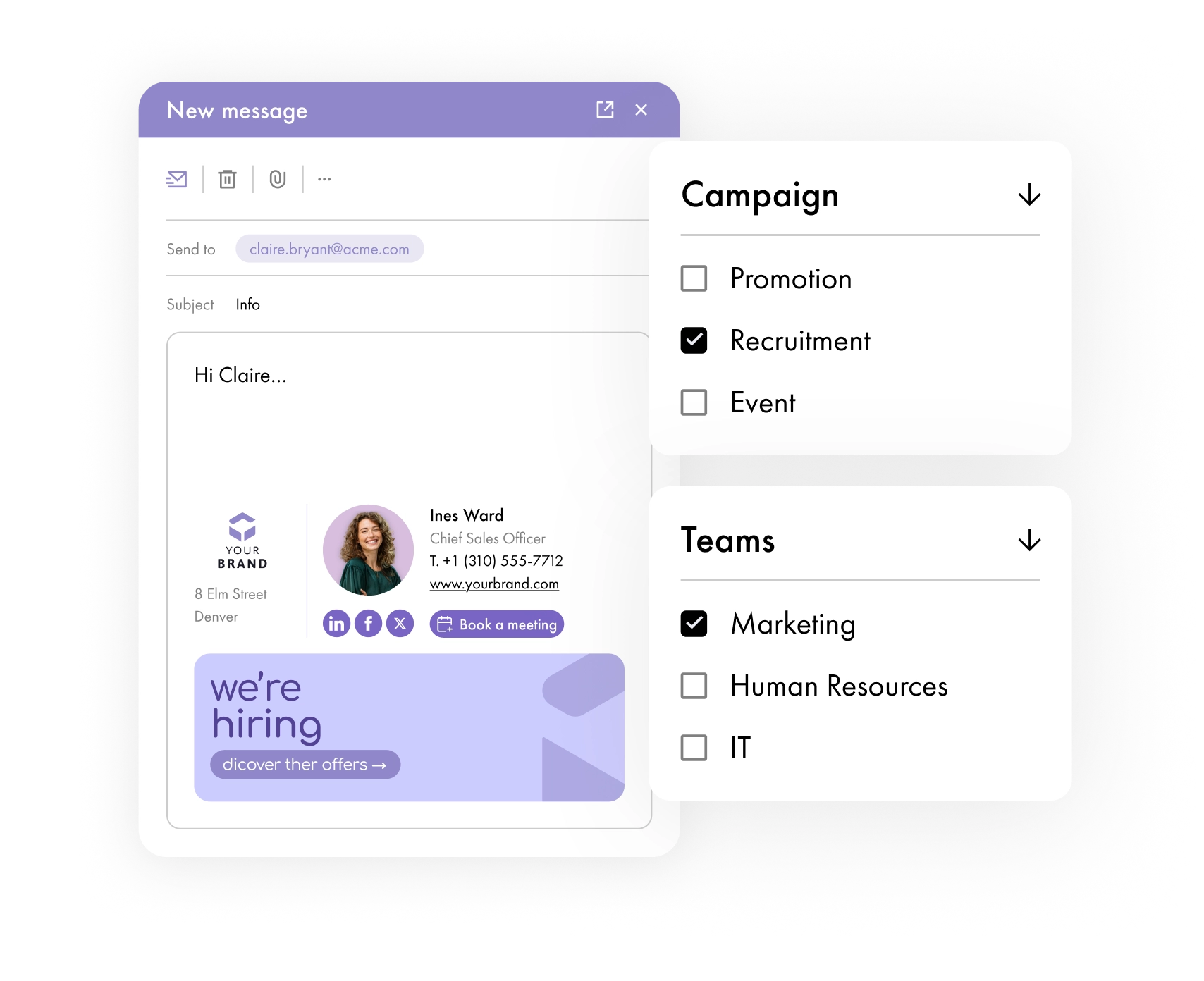
Centralising signatures gives Marketing and Communications a way to manage approved designs and update them across the organisation, rather than asking each employee to make changes manually. It also opens up a communication opportunity: an employee email can carry a relevant campaign or piece of content alongside the conversation already taking place.
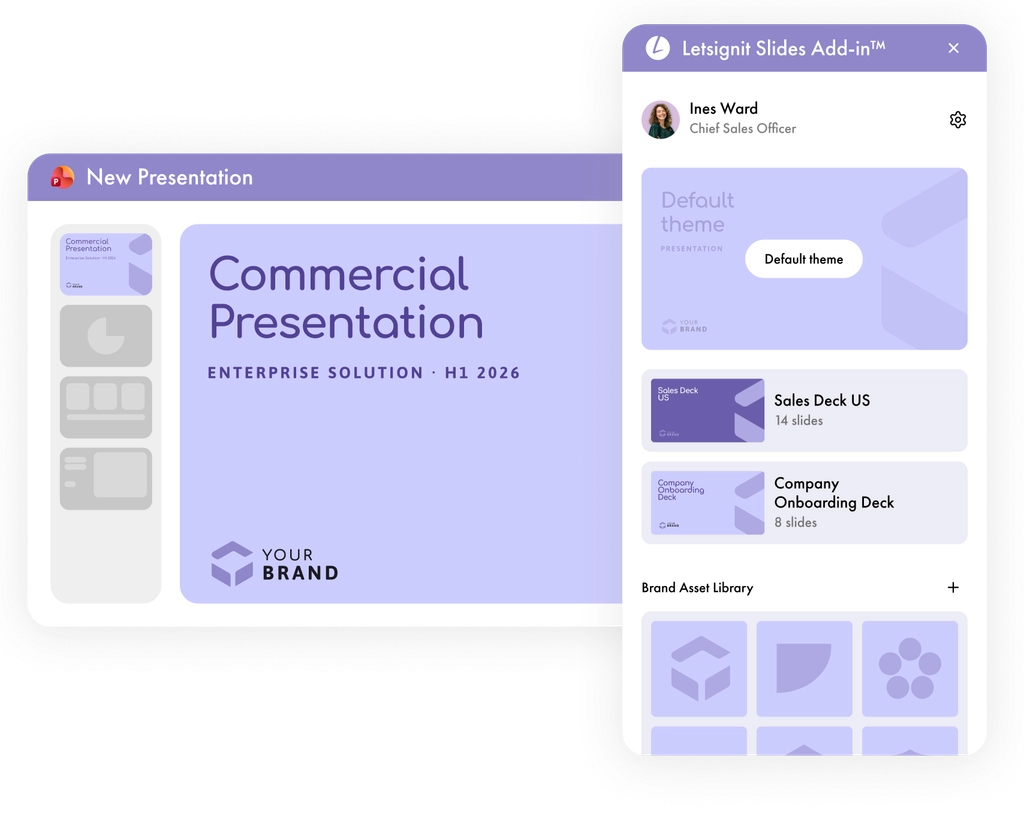
The same logic applies to powerpoint presentations. With Letsignit Slides, teams can access approved templates, slides and brand assets directly in PowerPoint. A salesperson can prepare for a customer meeting using current materials, then adapt the presentation to the conversation rather than rebuilding it from an old deck.
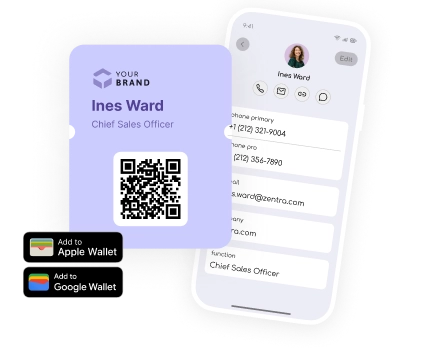
Digital business cards bring another everyday interaction into the picture. Letsignit vCards give employees a branded way to share their details, with information kept up to date as it changes. The encounter stays personal; the identity and information supporting it do not have to depend on a manual update.
These are different uses, not a claim that one platform governs every interaction. A customer conversation, a support call or a job interview will always depend on human judgement.
But the principle is the same: protect the brand and make the interaction more valuable, without making employees responsible for policing every detail.
Making consistency work in practice
For CMOs, the opportunity is to look beyond individual mistakes and ask where the brand experience breaks down. Can employees find and use the right materials? Do updates reach the people who need them? Are recurring workarounds a sign that something should be simpler?
The aim is not to eliminate every exception. It is to give people the tools and clarity to represent the brand confidently, while leaving room for the conversations that make each interaction personal.
"Just this once" will always exist. The question is whether it remains an exception, or becomes the way the brand operates.