

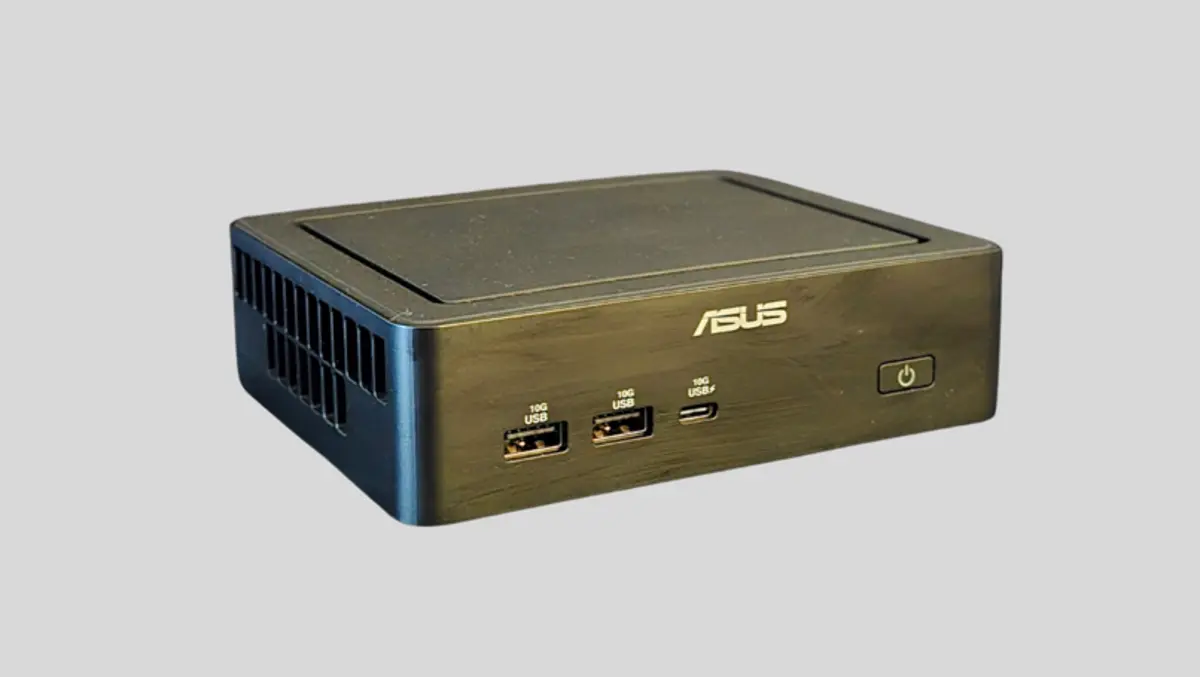

Ventiva has partnered with ASUS to explore thermal designs for compact AI computing systems. The work will examine the use of Ventiva's ionic cooling in future ASUS NUC and Mini-PC products.
The initial phase focuses on prototype development and technical evaluation, using an ASUS NUC demonstration platform to test thermal design options in small AI-ready systems.
The agreement reflects growing pressure on hardware makers to manage heat in machines expected to deliver more processing power in smaller enclosures. In compact systems, cooling design can affect component placement, internal layout and acoustics as processors and memory generate more heat under AI workloads.
Ventiva's approach uses ionic cooling rather than mechanical fans. The company says the method provides silent, vibration-free airflow in a compact modular design, potentially freeing circuit board space and giving engineers more flexibility over system layouts.
ASUS and Ventiva are assessing where that design could fit into future AI system architectures for the NUC and Mini-PC range. They described the work as an exploration rather than a product launch.
Christian Schlachte, Director of Product Management at Ventiva, said the collaboration points to a broader shift in how cooling is treated in computer design.
"Thermal management has always been treated as a component-level decision. What we're seeing now, and what this partnership with ASUS reflects, is that it's becoming a platform architecture decision. How you cool a system determines what you can build," Schlachte said.
"We're excited to work with ASUS to demonstrate what the shift to a 'thermal first' architecture makes possible."
Thermal pressure
Heat has become a central engineering issue in AI PCs and compact desktop systems because higher compute density can expose the limits of conventional fan-based cooling. Traditional systems can take up significant internal space and may introduce vibration and noise, both of which become harder to manage as chassis sizes shrink.
Ventiva said its technology is based on electrohydrodynamic flow, using an electric field to move ionised air molecules without rotating parts. It says this allows airflow to be directed without the size and mechanical constraints of a fan.
The thermal subsystem described by Ventiva includes an air blower device, fin stack, and either a vapour chamber or heat pipe. The company said the blower devices can be placed near heat sources such as system-on-chip processors, memory and power delivery components.
That arrangement could matter in AI-focused systems, where heat is often spread across several tightly packed components rather than concentrated in one area. Designers are increasingly looking for ways to cool multiple thermal zones without making devices thicker or louder.
Alex Gilpin, Senior Manager of NUC Advanced Engineering at ASUS, said thermal design is becoming a larger part of compact AI system development.
"Thermal architecture is becoming an increasingly important part of how next-generation compact AI systems are designed," Gilpin said.
"Our partnership with Ventiva reflects a shared interest in exploring new approaches that could help shape future ASUS NUC and Mini-PC designs. This initial phase focuses on prototype development and technical evaluation as both teams assess what is possible."
Compact systems
ASUS's NUC and Mini-PC lines sit in a segment where size, power draw and noise can be as important as processor performance. That makes thermal engineering a prominent issue, particularly as AI features move into smaller desktops and edge systems used in offices, retail settings and industrial deployments.
Ventiva has argued that fanless airflow systems can also change how internal components are arranged by removing the need for some air gaps and placement restrictions associated with conventional blowers. In its technical description, the company said its module can support internal application heights as low as 5 mm.
It also said its cooling system recorded less than 15 dBa sound pressure in anechoic chamber testing. The company described the airflow as silent and vibration-free because the design does not rely on moving mechanical parts.
For ASUS, the evaluation gives engineering teams a way to test whether an alternative cooling approach can support future compact AI hardware designs. For Ventiva, the partnership offers a way to assess how its technology performs in a widely recognised small-form-factor PC platform.
The collaboration remains at the prototype stage as both companies assess what is possible.