Energy efficient stories
Univers partners with SBS Transit to launch an AI platform aiming to boost energy efficiency and sustainability across Singapore's public transport network.
New underground data centres paired with agrovoltaic farms and solar cooling offer a sustainable model supporting agriculture, food security and climate goals.
Canon launches ultra-compact desktop scanners DR-C350 and DR-C340, designed to fit small spaces and boost productivity in offices and retail settings.
Sustainable Integrated Data Farms fuse underground data centres, solar energy, and agrovoltaics to boost efficiency, food security and cut emissions.
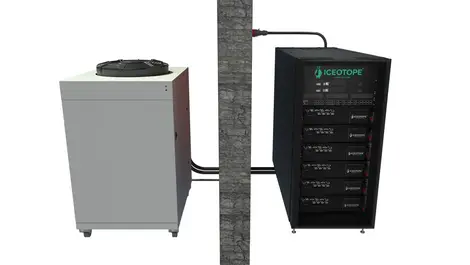
Iceotope unveils KUL BOX, a compact liquid-cooled rack system enhancing AI edge computing in factories, hospitals and telecom sites lacking datacentre facilities.
AI and automation will revolutionise supply chains in 2026, boosting efficiency and sustainability while requiring human oversight and adaptable partnerships.
VIOOH's programmatic digital out of home ads emit just 0.041g CO2e per impression, setting a new low and outperforming other programmatic channels.
CASwell launches the CAF-0120, a fan-less AI-powered firewall and VPN gateway for small firms, featuring Intel Atom tech for quiet, efficient cybersecurity.
AI's surge demands data centres to be redesigned with liquid cooling, high-density power, and sustainability for scalable, efficient infrastructure across Europe.
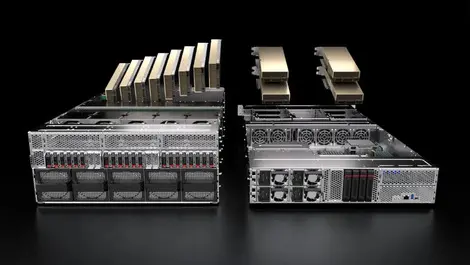
MSI has launched modular servers and AI platforms with AMD, Intel, and NVIDIA, targeting scalable, energy-efficient data centre solutions for cloud and AI workloads.
Schneider Electric and Bloomberg launch Energy Technology Coalition to drive demand-side tech adoption amid rising global electricity use.
Siemens and Delta partner to deliver modular, prefabricated power solutions cutting data centre deployment time by 50%, costs by 20%, and emissions by 27%.
Intel has certified ExxonMobil's immersion cooling fluids for use with its 4th and 5th-gen Xeon processors, offering warranty-backed support for data centres.
XYZ Reality uses augmented reality to oversee a USD $400m AI data centre build in North Dakota, enhancing precision and sustainability in construction.
By 2026, AI agents will fully manage shopping, choosing and buying products based on your style and needs, transforming retail into seamless, intelligent commerce.
Itron partners with Connected Lighting Solutions to expand smart street lighting across Australian cities, enhancing safety and cutting energy costs.
TRG Datacenters launches its 24 MW HOU2 site near Houston, offering USD $4.7m power savings and targeting hyperscale, cloud, and AI customers by 2026 Q4.
PwC partners with Multiverse Computing to enhance AI efficiency and security, using CompactifAI for faster, greener, and more secure AI deployments across industries.
AI data centres boost network speeds to 1.6Tb/s, relying on structured cabling for efficient, scalable, and reliable high-density fibre infrastructures.
Oral Roberts University and CityPlex Towers cut operational costs significantly using Radix IoT's Mango platform, saving over USD $100,000 annually in utilities.