Critical Infrastructure stories
Rising AI workloads are forcing operators to simplify power and cooling controls as data centres race to come online faster and cut commissioning risk.
Smaller operators face faster, cheaper attacks as Five Eyes agencies say frontier AI could reshape cyber threats within months.
Fewer firms are overestimating OT security maturity, as only 14% can see their environments fully and gaps are coming into focus.
The new capital will fund Horizon3's expansion into Asia-Pacific and Europe as demand for its attack-testing software grows among large enterprises.
Pressure is rising on security teams to prepare for quantum attacks, as Gartner highlights QuSecure in three Hype Cycle reports.
Undisclosed attacks now dominate ransomware activity, with 2,027 incidents logged in the quarter and data theft reported in 97% of disclosed cases.
The service targets firms struggling to monitor autonomous AI agents, as enterprises face wider security, compliance and cost risks.
Customers in government and defence will get local support in Australia and New Zealand as Veris takes on Octave's geospatial software distribution.
South Island internet users could see faster, more resilient links as the new Invercargill-Melbourne cable adds New Zealand's first southern landing point.
The shift could leave sites exposed unless firms match cyber defences with repeated identity checks at doors and restricted rooms.
Operational advantage will hinge on linking new tools with existing networks, as Telent warns data and infrastructure gaps can blunt AI gains.
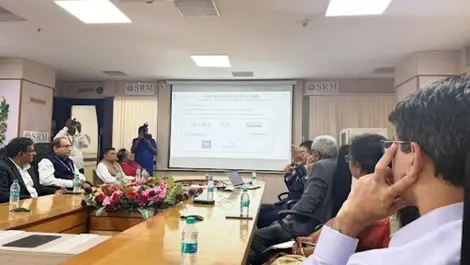
A new lab and faculty certification programme aim to widen India's quantum talent pool as universities race to build teaching capacity.
Backed by federal funding, the Australian-made device aims to give soldiers and security teams a lighter way to disrupt fast-evolving drone threats.
Security teams face faster, stealthier intrusions after AI agents managed to breach live systems in controlled tests by Anthropic and OpenAI.
Businesses risk building outages and wider network breaches unless they secure internet-connected systems, Restore Information Management has warned.
Financial institutions still face hidden fourth-party risks even after Microsoft, Google Cloud, AWS and Oracle were designated as critical providers.
A survey of 204 US executives found 22% had suffered an AI-enabled breach in ERP systems, deepening doubts over existing safeguards.
Supply chain attacks are pushing cyber risk upstream, putting managed service providers under pressure from customers and regulators over shared access.
Clients in regulated sectors may be able to test sensitive workloads in Canada, easing data-sovereignty worries as quantum use matures.
Factory downtime risks and supply chain disruption have made UK manufacturing the country's most targeted sector for ransomware, SonicWall said.