

Sber says AI shift is moving towards autonomous agents
Mon, 20th Jul 2026
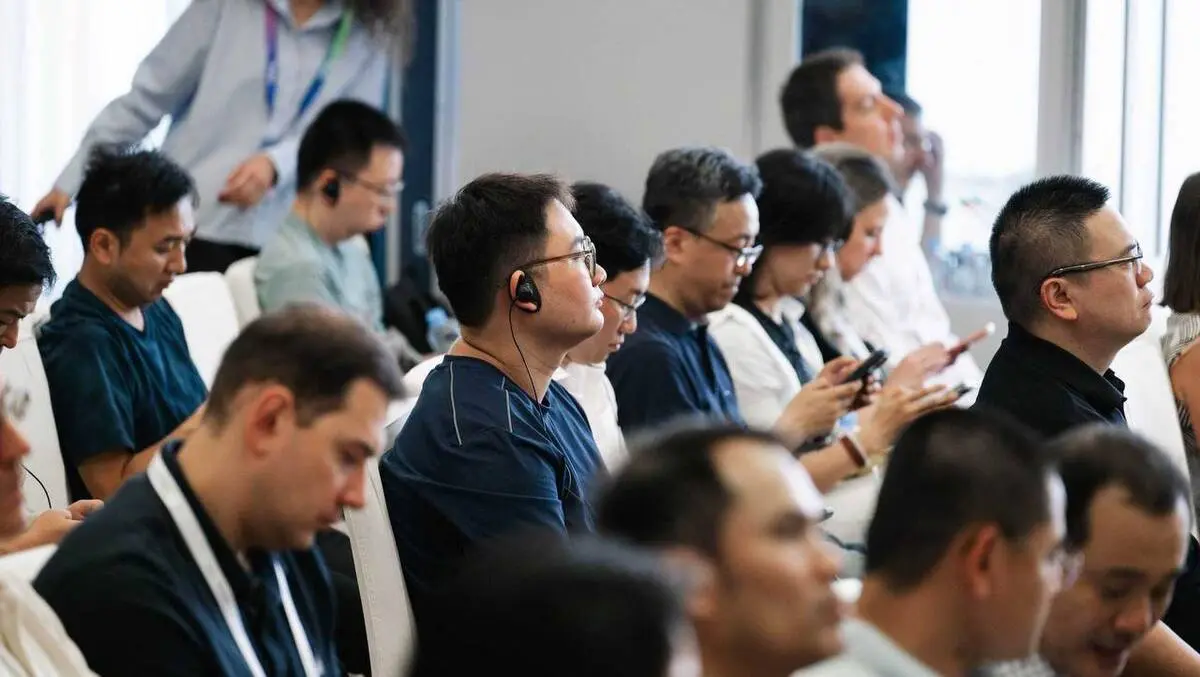
Sber executives and researchers used an AI Journey session at the World Artificial Intelligence Conference in Shanghai to outline their views on the next phase of artificial intelligence development. The discussion focused on the rise of autonomous agents and new model designs.
Speakers from Sber, Chinese research groups, and other institutions examined how generative AI is reshaping software development, robotics, speech systems, and governance. The session also explored why many corporate AI projects remain stuck at the pilot stage and what is needed to move them into wider industrial use.
Opening the event, Andrey Belevtsev, Senior Vice President and Head of Technological Development at Sber, argued that AI is moving beyond assistant software toward systems that can carry out transactions and manage physical processes with limited human intervention. He said people would increasingly act as high-level supervisors rather than direct operators.
Sber linked that argument to its own work on infrastructure for autonomous systems, including its GigaNetwork platform, visual-language-action models for robots, and updates to its GigaChat and Kandinsky neural networks.
Software shift
Kirill Menshov, Senior Vice President and Head of Technology at Sber, said the bottleneck in software development is changing. In his view, the main constraint is no longer writing code quickly but defining tasks precisely enough for AI systems to produce reliable results.
He linked that shift to organisational change inside businesses. Firms that build end-to-end verification for AI output and redesign teams around managing prompts, context, and results are likely to fare better than those that treat generative AI as a simple coding tool, he said.
The session then turned to the technical limits of current AI models. Sergey Markov, Director for AI Technology Development at Sber, said the industry faces a mismatch between rapidly rising computing budgets and slower growth in the digitised data available for training.
That imbalance could force a rethink of the standard pattern of large-scale pre-training followed by fine-tuning on expert-created dialogues, he said. Markov pointed instead to continuous and active training methods, as well as asynchronous recurrent architectures that may offer an alternative to very large monolithic models.
In his description, those architectures could allow systems to vary the time spent on reasoning according to the complexity and urgency of a task. The idea reflects a broader industry search for models that rely less on ever larger training runs and are more adaptable in operation.
Autonomy debate
Semyon Budenny, Head of High-Potential AI Technology Development at Sber, argued for decentralised structures rather than centralised control. He said the long-term path for autonomous AI lies in self-organising graphs of agents with dynamic topologies, where agents coordinate among themselves, manage memory, and verify actions throughout their life cycle.
That emphasis on agent-based systems ran through much of the session. Participants repeatedly returned to the idea that AI development is shifting from individual models answering prompts to networks of specialised agents handling sequences of actions.
In robotics, Alexey Postnikov, Executive Director of the Sber Robotics Centre, said industrial adoption would depend on visual-language-action models and on testing systems that can be reproduced consistently. He argued that pilot projects should be treated as part of research and development, with clear metrics, especially for judging how robots respond to unusual situations.
Evgeny Burnaev, Vice President for AI Development and Director of the Skoltech AI Centre, said many corporate projects have failed to scale because they lack a common engineering environment for AI. Broader deployment requires what he called "engineer AI," a structure in which agents can interact, build up experience, explain decisions, and operate under human supervision.
New models
Chinese speakers used the session to highlight alternatives to the transformer architecture that has dominated recent AI progress. Xuan Luo, a developer of RWKV and Co-Founder of YuanShi, said linear recurrent neural network designs were becoming more competitive, citing RWKV-7 as evidence of that trend.
He also pointed to the prominence of DeepSeek and Moonshot AI as signs of growing interest in hybrid models and linear attention. The remarks reflect a wider debate in AI research over whether newer architectures can reduce the cost and complexity of large transformer systems.
Xipeng Qiu, Professor at Fudan University and a CAAI Fellow, focused on speech systems. He described a future in which end-to-end speech recognition and text-to-speech systems are integrated with large language models to produce dialogue systems that generate more natural speech while using conversational context.
Governance focus
The final section of the session addressed governance. Andrei Neznamov, Managing Director of the Centre for Human-Centric AI at Sber and a member of the UN Independent International Scientific Panel on AI, moderated a panel with participants from the AI Alliance and speakers from China, Africa, and Brazil.
The discussion covered governance from the ecosystem level down to individual products, including model security and the use of generative AI agents in the public sector. Panelists agreed that governance would be central to wider adoption of AI systems, particularly where organisations want practical use rather than limited trials.
One of the clearest themes across the session was that the next contest in AI may be less about building ever larger standalone models and more about making systems dependable, testable, and governable in real settings. Participants repeatedly linked progress in autonomy to verification, supervision, and the ability to explain machine decisions in complex environments.
As Burnaev put it, scaling depends on "engineer AI," a unified environment in which AI agents can interact, accumulate experience, explain their decisions, and operate under human supervision.