

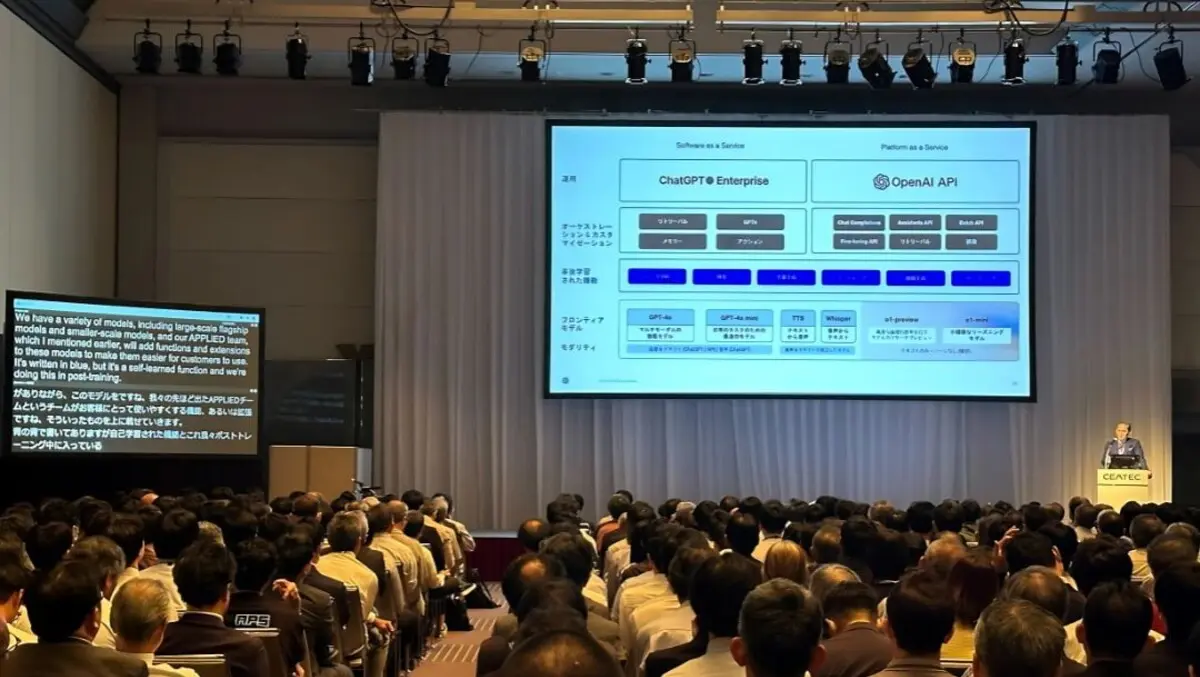
Enterprise event pros favour AI translation over humans
Fri, 26th Jun 2026
Wordly has published survey findings showing that 66% of enterprise event professionals believe AI translation and captioning deliver better quality than human interpreters, pointing to a shift in how organisations manage multilingual meetings and events.
Dimensional Research conducted the survey among 205 meeting and event stakeholders in the United States and United Kingdom at organisations with more than 1,000 employees. All respondents were responsible for multilingual meetings and events, linking the findings directly to corporate communications, training, customer engagement, and large gatherings.
The data suggests that views of AI translation improve with use. Among frequent users, 79% said AI translation performs better than traditional interpretation, while 12% preferred human interpreters. Even among occasional users, 61% said AI delivers a better overall experience.
This marks a notable change in a market where human interpreters have long been the standard for live multilingual communication. Only 25% of respondents said human interpreters provide a superior experience.
Quality gains appear to be one factor behind the shift. A total of 93% of respondents said AI translation quality had improved over the past year, indicating noticeable changes in the output of these systems.
At the same time, companies are dealing with broader language needs at events and meetings. The survey found that 88% of respondents had seen an increase in non-English-speaking participants, up from 77% in the previous year's study.
That increase is affecting planning priorities. Almost all respondents, or 96%, said comprehensive language access is now an official priority for their organisation.
Cost pressure
Budget and deployment were also cited as reasons for adoption. According to the findings, 95% of respondents agreed that AI translation is easier and more affordable to deploy than traditional interpretation services.
For event teams, the appeal goes beyond price. AI systems can reduce the need to schedule interpreters, arrange support for multiple languages, and manage on-site equipment, all of which can add operational strain to live events.
The findings come as artificial intelligence continues to face broader questions about reliability and trust across industries. Here, the survey suggests organisations using translation tools are placing more weight on practical outcomes than on the wider public debate.
"Much of the public conversation around AI still focuses on risk, uncertainty, and what the technology cannot do," said Lakshman Rathnam, Founder and CEO of Wordly. "But organizations using AI translation are making decisions based on results, not assumptions. They are seeing meaningful improvements in quality, accessibility, and scalability, and that is changing expectations for how multilingual communication should work."
Beyond translation
The research also points to growing demand for related multilingual content tools. While 88% of respondents said they already use AI interpretation and 91% use AI captioning, many want the technology to do more before and after meetings.
Among those surveyed, 58% wanted multilingual transcripts, 53% were interested in subtitle and voice-dubbing files, 51% wanted automated meeting notes and action items, and 50% were looking for marketing-ready summaries and content assets.
This suggests buyers increasingly see language software as part of a broader communications workflow rather than a single-purpose tool for live interpretation. For providers in the sector, that could widen competition from meeting software, collaboration platforms, and specialist AI vendors moving into adjacent services.
Wordly says it has more than 5,000 organisational customers and 6 million users across more than 120 countries. It has delivered more than 1 billion minutes of live translation and captioning since it was founded.
The survey's focus on large organisations in the US and UK means the findings reflect the priorities of enterprise buyers rather than the wider market. Still, the results offer one of the clearest indications yet that corporate event teams are becoming more comfortable replacing or reducing traditional interpretation services when AI tools meet quality, access, and budget requirements.