

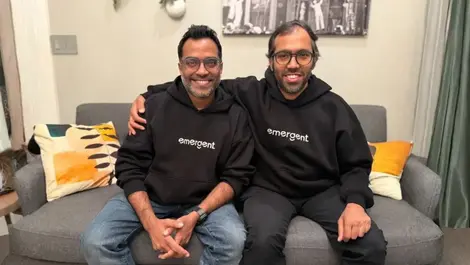
Emergent launches Wingman AI agent for workplace tasks

Emergent has launched Wingman, an autonomous AI agent for workplace tasks aimed at professionals, founders and small businesses seeking help with routine work.
Wingman is designed to handle ongoing tasks across messaging platforms and business software, including scheduling, administration, sales support, research and hiring. Unlike prompt-based tools, it is built to work continuously in the background.
The launch comes as Australian businesses show growing interest in AI systems that can take on operational work amid productivity pressure and skills shortages. Smaller companies in particular are under strain to manage more work with leaner teams and shorter turnaround times.
Wingman connects to tools already used in day-to-day work, including Gmail, Outlook, Google Calendar, Slack, customer relationship management systems and GitHub. It can also be accessed through messaging apps such as WhatsApp, Telegram and iMessage.
Users can run several agents at once, each focused on a separate function, including schedule management, social media management, sales assistance, research analysis and hiring support.
Approval controls
Emergent has placed controls around what the system can do without permission. Lower-risk actions can be completed automatically, while more consequential actions require user confirmation before proceeding.
Examples include sending a message to a large group or changing important data. The product is intended to separate routine work that can be delegated from actions that still need direct approval.
Wingman also stores short-term context and user preferences so work can continue across sessions without repeated instructions. This allows the agent to retain routines and recall earlier interactions over time.
The launch expands Emergent beyond its software creation platform into workplace automation. More than eight million founders and business owners across more than 190 countries have used its platform to create software.
Backers include Khosla Ventures, SoftBank, Lightspeed, YC, Prosus, Together and Google's AI Futures Fund. Emergent was launched in 2025.
Broader shift
The release comes amid a broader shift in how companies are approaching artificial intelligence tools. Early business adoption often centred on prompt-based chatbots and one-off assistants, but suppliers are now pushing systems that stay active and handle recurring workflows across multiple applications.
That trend has been especially relevant for smaller businesses, where managers and staff often combine multiple roles and spend large amounts of time on coordination, administration and follow-up work. Products that sit inside email, calendars, messaging services and customer systems are being positioned as a way to reduce that load without requiring specialist technical staff.
Wingman can be set up by signing in to existing tools rather than through developer-led integration, which may appeal to companies seeking to test automation without committing engineering resources.
In Australia, that may resonate with firms trying to embed AI into ordinary business processes rather than treat it as a stand-alone experiment. Demand has increasingly focused on practical uses tied to day-to-day work, particularly where labour constraints are making it harder to maintain output.
Mukund Jha, Co-Founder and Chief Executive Officer of Emergent, said the company sees routine work as a growing drag on productivity.
"Most people aren't failing at productivity. They're buried under the smaller tasks that never stop coming. We proved with software creation that the right technology, built the right way, reaches everyone. Wingman applies that same principle to autonomous agents. Now, anyone can have an always-on team working in the background, not just people who know how to build one," Jha said.