

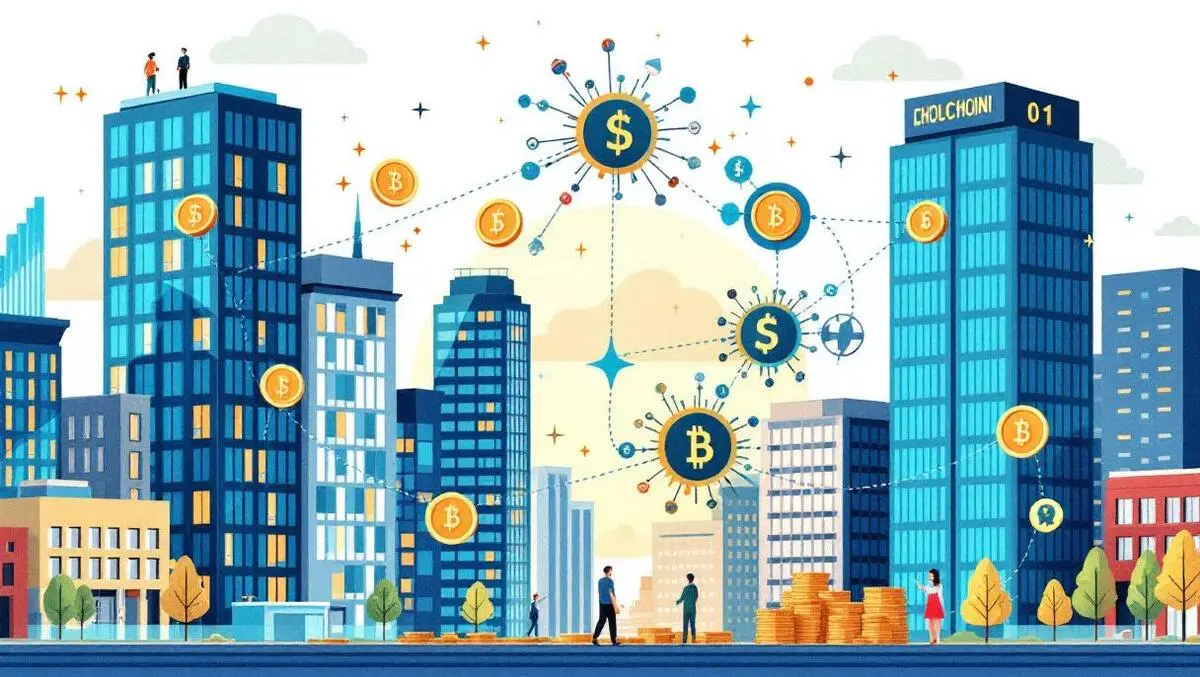
Blockchain & Web3 drive digital transformation in real estate
Mon, 7th Jul 2025
Blockchain and Web3 technologies are being highlighted as major catalysts for transformation within the global real estate sector, as new systems and regulatory frameworks continue to impact property investment, trade, and development worldwide.
Lia Rochat, Founder and Chief Executive Officer of France-based Archismart Solar, emphasised the importance of adapting to technological advancements in her remarks at the Real Estate Investment in Global Trade Hubs session of the World Trade Centers Association Global Business Forum.
"Adopting innovative technology solutions is critical to remain competitive in the evolving real estate and business landscape. I believe key changes will come from blockchain and Web3, as these will enable decentralised, transparent, trusted and faster interaction without relying on central authorities such as banks, brokers, and big tech platforms," said Ms. Rochat.
Ms. Rochat also commented on the impact of Web3, outlining its potential to restructure the real estate sector through digital asset tokenisation and direct transactions between parties.
She said, "It will change everything in real estate trade, and in approaches on how to develop and finance real estate."
Web3 and tokenisation
Web3 is seen as the next generation of the internet, focused on decentralised and open-source technologies like blockchain. It aims to enable a more transparent and secure digital environment where users can better control their data and privacy.
Asset tokenisation through Web3 involves converting ownership of physical assets, such as property, into digital tokens. These tokens can be traded on blockchain platforms, allowing new investment opportunities and alternative asset classes to emerge.
Diego Cortese, Vice President – Venue Commercial at Dubai World Trade Center, reported that Dubai has moved forward in adopting these technologies, referencing recent collaborations with regulatory authorities for digital assets and real estate tokenisation. He said DWTC recently partnered with the Virtual Asset Regulatory Authority to regulate digital or virtual assets, and has signed an agreement with the Dubai Land Department to tokenise real estate transactions.
Singapore's property outlook
The latest Singapore Real Estate Market Outlook by CBRE finds that the country's market remains attractive to investors despite broader international volatility.
Singapore's projected economic growth of 1–3% for 2025, coupled with a likely decline in interest rates, is expected to encourage greater investment activity and improve market sentiment.
Transaction volumes in Singapore's real estate sector are anticipated to rise by approximately 10%, particularly in the residential, logistics, and data centre segments. The report suggests that, while investors are increasingly selective, Singapore retains its reputation for stability and long-term potential, especially for income-generating assets in prime locations. The adoption of blockchain and the tokenisation of real estate are cited as pathways to enhancing transaction efficiency and investment processes, further aligning with Singapore's economic development goals.
The Monetary Authority of Singapore (MAS) has played an active role in shaping the regulatory landscape for digital assets. MAS has provided guidance for digital token offerings and initiated pilot projects, including the issuance of wholesale central bank digital currencies (CBDCs), aimed at facilitating settlement of large-value interbank transactions.
In a recent development, CitaDAO, a blockchain-based real estate tokenisation platform, completed Singapore's first commercial real estate tokenisation project in the Midview City industrial area. The project has an initial tokenisation value of USD $635,000 and is intended to broaden investment access and liquidity by employing blockchain technologies.
Global summit perspectives
At this year's World Trade Centers Association Global Business Forum, the Real Estate Summit addressed the implications of digital transformation and innovation across the industry. Jacopo Dettoni, editor at fDi Intelligence, commented on the acceleration of Artificial Intelligence and its likely impact on real estate business models.
"The next wave is going to come from Artificial Intelligence, and it is going to come pretty quickly. Acknowledging the wave and trying to ride it rather than being hit by it is how we are going to define winners and losers," said Mr. Dettoni.
He also observed a shift in foreign direct investment trends, with funds moving away from offices toward residential, industrial, and data centre assets. Additionally, there is increased activity in life sciences-related properties such as laboratories and clinics worldwide.
Mr. Dettoni pointed out that data centres, once concentrated in major economic hubs, are now being distributed across various regions in response to changing demand and cost drivers.
Forum attendees from over 50 countries and territories, including nearly 120 World Trade Center businesses, discussed market opportunities, sustainable infrastructure, and areas of rapid growth such as logistics and data centres. The event examined the continuing importance of commercial real estate in economic growth and the evolving landscape in which new technologies are likely to play a leading role.