MSMEs stories
With women-led businesses still receiving only 14% of lending, the bank plans faster credit growth for underserved entrepreneurs and rural firms.
Foreign wallet users can now pay Philippine merchants through existing QR Ph codes, widening access for SMEs and boosting cashless trade.
Its return to CNBC and Statista's fintech ranking underscores TBC Uzbekistan's growing influence in a fast-expanding digital banking market.
Broadening its appeal beyond consumer banking, the lender has surpassed 6 million monthly users as digital adoption accelerates in Uzbekistan.
Travellers and small merchants in Indonesia and China can now use domestic e-wallets across both markets, widening QR payment acceptance.
Mastercard partners CLIK Credit Bureau to sharpen Indonesian lenders' credit decisions, balancing digital growth with tighter risk control.
With most ASEAN firms still paper-based, the report argues accountants can help smaller businesses access digital support before DEFA takes effect in 2027.
The banking group aims to improve automation, risk visibility and local compliance as it replaces ageing treasury systems across ten markets.
The rollout aims to cut merchants' cross-border costs and speeds by automating onboarding, compliance, FX and treasury workflows with AI.
It gives TBC Bank a profitable online marketplace in Uzbekistan, reaching 5 million monthly users and opening new payment and lending opportunities.
Germany's millions of SMEs gain a same-day delivery option as the Hong Kong-founded platform begins operations in Berlin and plans wider expansion.
The new hub aims to help smaller firms on both sides enter each other's markets as UK-India trade links broaden beyond London.
Dealers and MSMEs stand to gain faster access to working capital as Punjab National Bank widens PSB Xchange's lender pool.
India's defence drone sector is expanding as manufacturers add more capacity, and government procurement supports locally developed unmanned systems nationwide.
MSMEs and dealer networks could gain quicker access to formal working capital as Bank of India plugs into a shared lending platform.
Amazon will invest USD $48 billion in India by 2030, expanding AI, cloud and logistics infrastructure while increasing jobs and exports.
Adoption alone may not lift output, with only 5% of Australian small firms fully using AI despite two-thirds already experimenting with it.
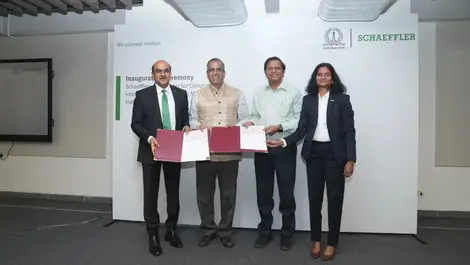
Researchers at IISc Bengaluru will gain access to new high-performance computing resources for simulations, analytics and collaborative projects.
India's industrial corridors risk locking in unequal workforce structures unless inclusion, mobility and care design guide early planning.
Open-source drives India's AI boom, with 76% of startups using it as the market soars from USD $6 billion to nearly USD $32 billion by 2031.