

Pleneo launches Planner for faster meeting room design
Mon, 4th May 2026
Pleneo has launched Pleneo Planner, a web-based platform for meeting room design aimed at channel partners, resellers and enterprise customers.
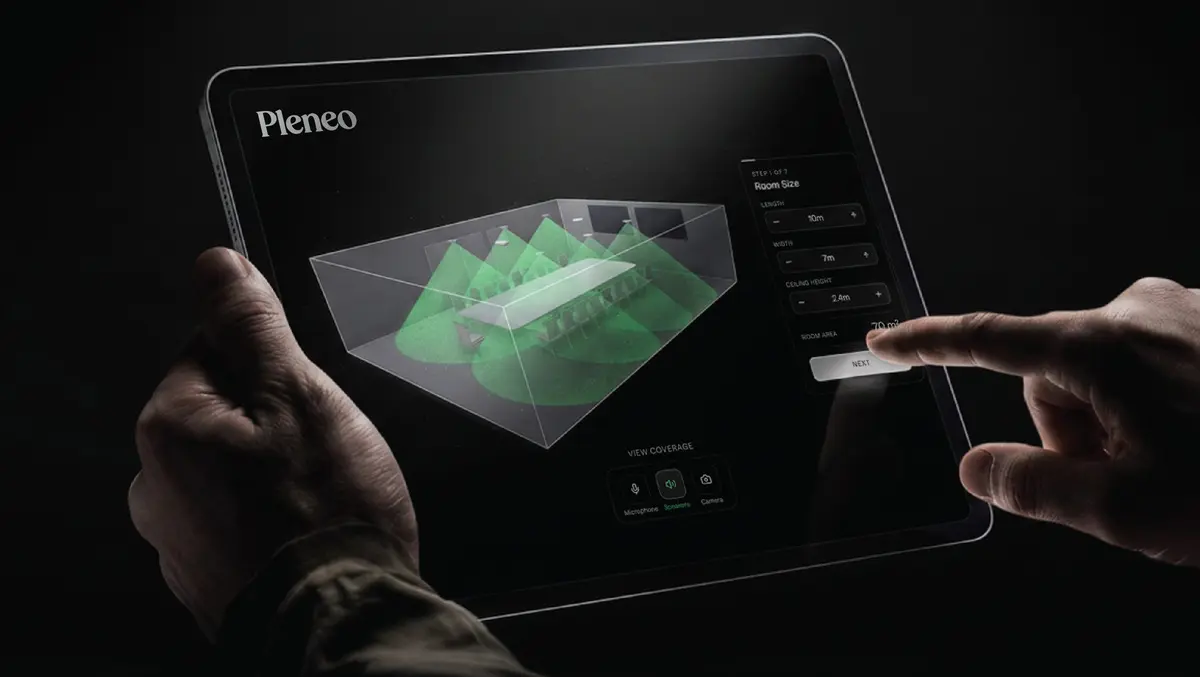
The software is intended to replace manual planning methods for collaboration spaces as organisations invest in hybrid work and AI-enabled meetings. After users enter room dimensions and intended use, it generates a room layout automatically, placing microphones, cameras, loudspeakers and processing equipment.
Built around AVIXA standards, the system is designed to give integrators and end users a starting point for projects that need to be repeated across multiple locations. It is aimed at customers seeking greater consistency in room layouts and documentation across estates with dozens or hundreds of spaces.
Users work in an interactive 3D environment that shows microphone pickup zones, loudspeaker coverage and camera fields of view in real time. They can also switch to the camera perspective to review what remote participants would see during a meeting.
This view is intended to help customers assess the room experience before installation and reduce problems caused by poor camera placement. The platform also allows users to adjust designs manually, moving, replacing or repositioning devices with immediate visual feedback.
Guidance remains active throughout the design process. The platform warns users if microphones and loudspeakers are placed too close together and flags cameras mounted outside the recommended height.
Jakob Rinman, Manager, Product Education & Enablement at Pleneo, said the aim was to reduce repetitive work without removing control from designers.
"Pleneo Planner was created to remove friction from room design," Rinman said. "Many organisations want to upgrade dozens or hundreds of spaces, but traditional design methods are still heavily manual. Planner automates the first stages of design so teams can move faster while maintaining quality."
The system is organised by category, allowing users to focus on microphones, cameras or loudspeakers individually while preserving the wider room design. That approach is intended to provide flexibility for rooms with unusual dimensions, furniture layouts or acoustic constraints.
"Automation is important, but control is equally important," Rinman said. "We wanted Planner to guide users rather than lock them into rigid templates. Every room has different dimensions, furniture layouts and acoustic challenges, so users still need the ability to adapt designs."
Design documents
Once a design is finished, the platform produces documentation packs for digital sharing and print. These include a bill of materials covering Pleneo and selected third-party equipment, device positioning layouts, room coverage snapshots, network recommendations, installation guidance and connection diagrams.
The documentation is intended to reduce the amount of project information stored across spreadsheets, emails and informal handovers. Pleneo argues that a more structured package can support the transition from sales to engineering and deployment teams.
"Too much project knowledge still lives in spreadsheets, emails and installer memory," Rinman said. "Planner turns that into a structured design package that can be handed from sales to engineering to deployment teams with far less friction."
Wider workflow
Pleneo is positioning Planner alongside its Pleneo Room OS software, which is designed to automate room deployment after planning is complete. According to the company, Room OS can discover connected devices, manage network connections, validate system health and tune room acoustics automatically.
Together, the two products reflect a broader effort to standardise both room design and room setup, rather than relying on different installers to configure each site manually. Planner supports both Pleneo hardware and selected third-party devices, allowing users to compare different room configurations side by side.
Pleneo expects interest from channel partners handling enterprise upgrades, education institutions updating learning spaces and organisations expanding collaboration environments across multiple offices. The launch comes as businesses continue to review the design and consistency of meeting rooms used for hybrid working, with technology teams under pressure to replicate layouts and user experience across large estates.
"With Planner and Room OS together, the outcome becomes more predictable," Rinman said. "Planner helps create the right design, while Room OS helps make sure every deployed room performs to the same standard."